
SteriSpace and Eureka! Unveil GETTS Shelter System At CBRNe Convergence Canada
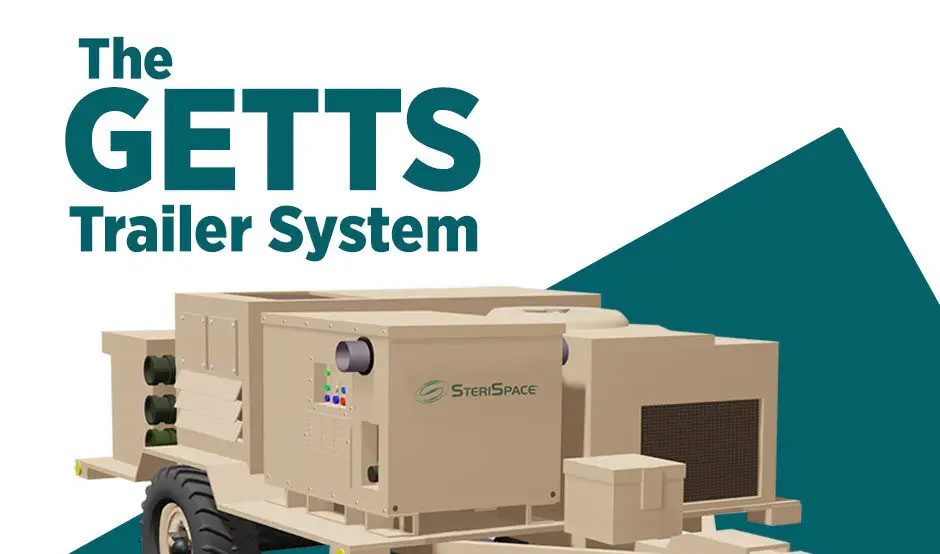
Eureka! and SteriSpace® will be co-exhibitors at the annual event for military and civilians, scientists, and first responders, to introduce a turnkey shelter system that combines the fastest tent set-up and strike cycles in the industry with the only air sterilization technology on the market. The turnkey solution delivers next-level air sterilization to any rapid deployment environment.
SteriSpace and Eureka! Set to Reveal Shelter System with Air Sterilization Technology at CBRNe Convergence Canada
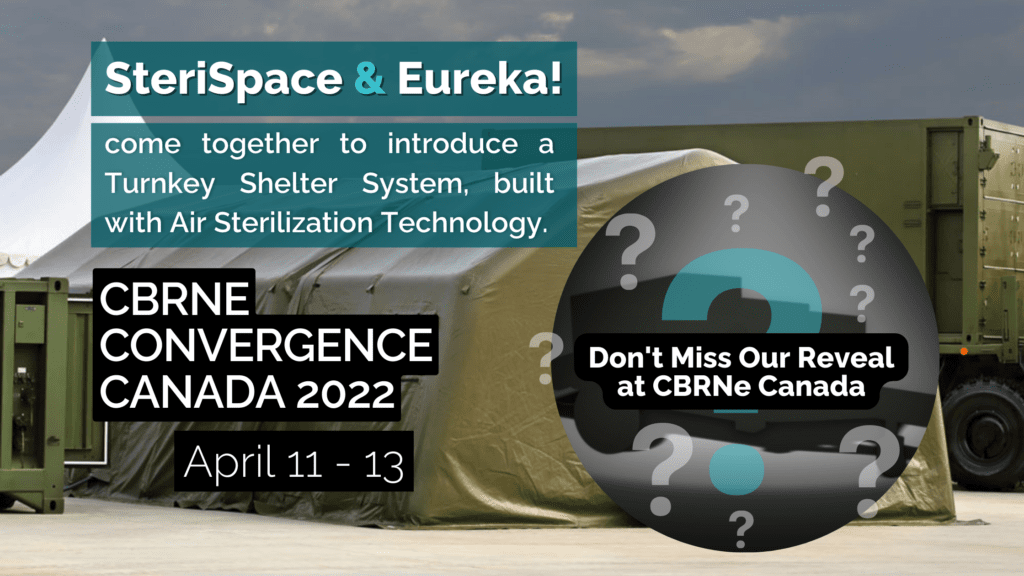
Eureka! and SteriSpace® will be co-exhibitors at the annual event for military and civilians, scientists, and first responders, to introduce a turnkey shelter system that combines the fastest tent set-up and strike cycles in the industry with the only air sterilization technology on the market. The turnkey solution delivers next-level air sterilization to any rapid deployment environment.
You First Services Partners With Camel Expeditionary To Integrate SteriSpace Air Sterilization Technology Into Military Shelter Systems

Unlike HEPA air filtration technology, SteriSpace uniformly treats the air & maintains positive or negative pressure based on the surrounding environment’s needs
Can Temporary Tents be Used in the Winter?
Can Temporary Tents Be Used In Winter? Facebook Link Youtube Linkedin Envelope Winterizing Temporary Tents For those of us up north, the return of winter means that another COVID-19 infection peak might be right around the corner. With this in mind, those in the healthcare and education industries are developing creative solutions to stay ahead of the disease and slow the spread. This has led to these industries turning to temporary tent structures and delegating federal funds to invest in new air filtration systems. However, while they prepare for the long winter ahead, both industries are encountering similar issues when it comes to supply and the overall effectiveness of these systems. Temporary Tents and Drive-Thru COVID-19 Testing Thanks to the ongoing COVID-19 pandemic, demand for temporary tent structures has soared. In particular, the healthcare industry has relied on temporary tent structures for their convenience and versatility in infection containment. COVID-19 drive-thru testing sites rely on temporary tent structures to relieve overwhelmed hospitals and clinics, and of course to help lessen the spread of the virus. But as temperatures drop, many workers at drive-thru sites are bearing the burden of trying to stay warm while administering tests. Cold temperatures are nothing new to most temporary tent businesses. While integrating a heating unit is the most obvious solution to beat the cold, what’s being done to maintain good air quality while limiting the collection of airborne pathogens in these structures? Difficulties Heating Tents While Maintaining Good Air Quality According to the American Society of Heating, Refrigerating and Air Conditioning Engineers (ASHRAE), three specific measures must be taken to maintain proper air quality in structures, permanent or temporary. First (and perhaps most importantly), there should be a focus on bringing in more fresh air from outside. Next, the ventilation should increase to 4 – 6 “air changes” per hour. Finally, it’s encouraged to introduce additional mechanical air filtration measures. ASHRAE spells out the issues associated with heating practices and warming up the fresh air. Not only are the costs associated exorbitant, but it is also profoundly inefficient for saving energy. With standard HVAC units in place, it’s less expensive to simply reheat the return air from the system. But this method ultimately comprises air quality. Not to mention, using an air filter to clean the hot air on the supply side of the system isn’t a practical option, as it can melt or damage the filter. As it stands, indirect units such as HVAC systems do not have an efficient way of mechanically filtering the air in temporary structures. Ostensibly, HEPA filters could be a solution — but a heightened demand for the units, the need for additional integrations such as UVC lights, and an overall lack of research on their efficacy make this an impractical option. Schools and COVID-19 Relief Funding As part of the $122 billion in federal funds delegated to American school systems for COVID-19 relief, school districts across North Carolina received their portion of the federal grant to the tune of $5.5 billion. Of that enormous sum of money, about $1.1 billion has gone toward PPE, additional cleaning and disinfection supplies, and the purchasing of laptops for remote learning. While the supply of funds will aid schools well into 2024, no school district in the state has spent over 40% of its allotted funds. Unfortunately, this issue doesn’t just appear to be unique to North Carolina. Long-term projects such as replacing HVAC systems, acquiring temporary tent structures for outdoor learning, and other critical school infrastructure initiatives are taking far longer to come to fruition due to supply chain issues. For many school districts, acquiring new HVAC systems is nearly impossible. This is because HVAC companies cannot keep up with demand because of a lack of competition and the aforementioned supply chain issues. As a result, schools have been sitting on this money with no way to access the materials it was originally intended for. SteriSpace Is an All-in-One Solution for All Seasons SteriSpace offers the solution for comprehensive indoor air treatment in a wide range of settings. Schools can integrate SteriSpace with their current HVAC systems and eliminate the need to start from scratch with a new unit. What’s more, SteriSpace is a standalone unit that can be used in isolation rooms such as the nurse’s suite to contain airborne infectious diseases. For drive-thru COVID-19 testing sites and schools opting for outdoor classes — tent occupants can stay warm in the cold winter months when viral infections are at their highest without compromising air quality. Recent Posts
ICU Annexes and SteriSpace Technology
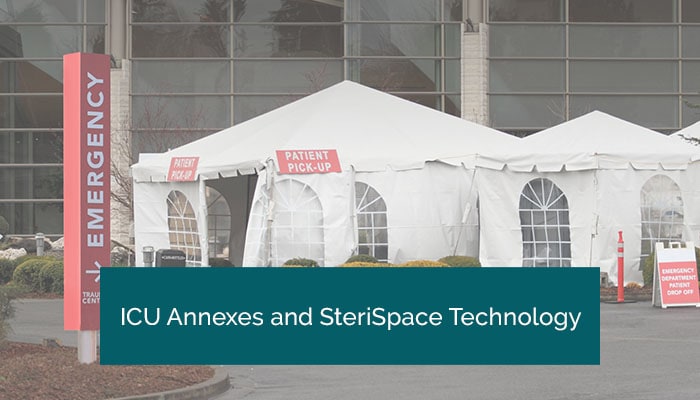
When caring for ICU patients, maintaining optimal air quality is critical. As the COVID-19 pandemic continues to overwhelm our healthcare systems, ICU annexes are faced with containing various airborne threats while caring for extremely vulnerable patients.
Changes in the Temporary Tent Industry
Current trends are pushing the temporary tent industry in new directions. As a result, temporary tent structures are advancing to meet the changing needs of various industries.
Why HEPA Can’t Protect Your Military-Grade Shelter
Now that SteriSpace is readily available, manufacturers should prepare for air sterilization technology to be included in future customer requirements. This makes now the perfect time to conceptualize the integration of this technology into your shelters.
AUSA 2021 Meeting & Exposition
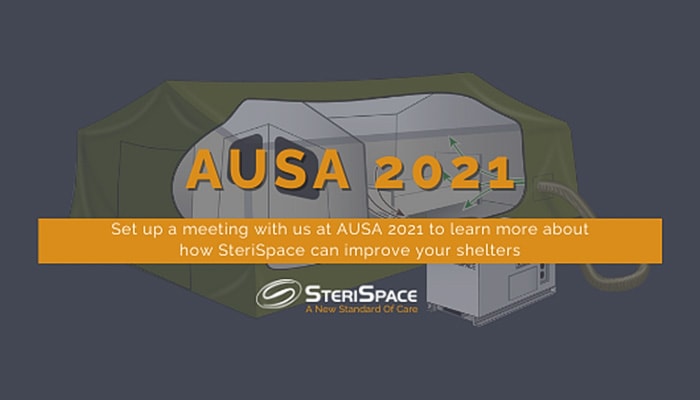
AUSA Meeting and Expo is back this year! Set up a meeting with a SteriSpace rep while at the Expo and learn more about Air Sterilization.
What are Military Shelters?
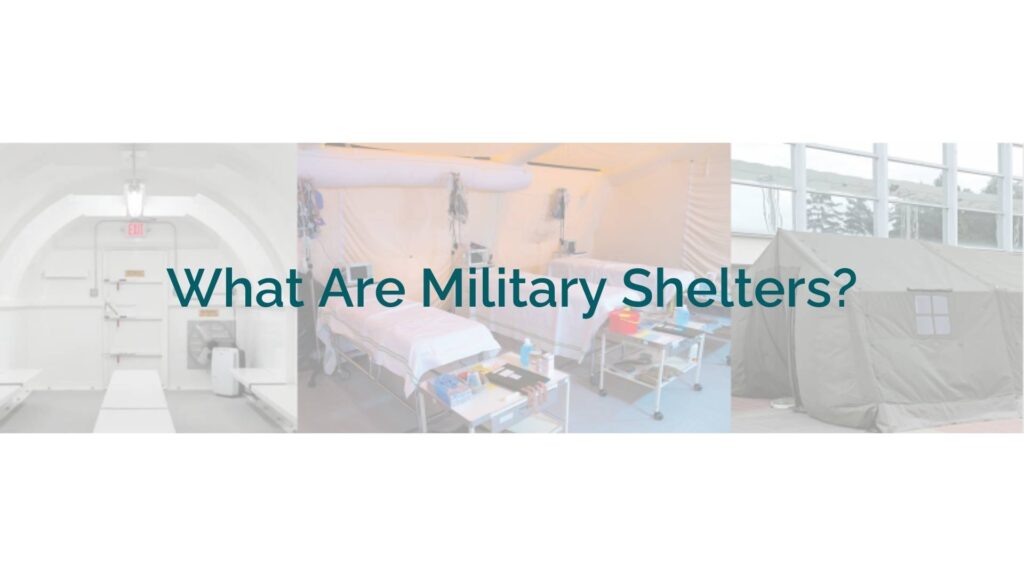
The military tent and shelter market has had an industry boom and it doesn’t look like it’s going to stop anytime soon. According to Market Insights, Inc., this market will be worth over 1 billion USD by 2027!
How SteriSpace Supports Outdoor Shelters
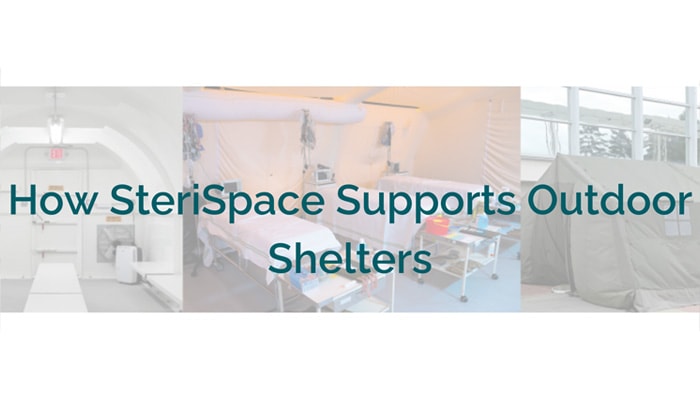
A protective shelter is only as effective as its ability to prevent potentially harmful airborne threats. For those who depend on these structures, containment is essential, but equally important is a shelter’s ability to eliminate possible contaminants that can lead to the transmission of disease.