
Why The Clean Air Challenge Should Include Air Sterilization Technology
Eureka! and SteriSpace® will be co-exhibitors at the annual event for military and civilians, scientists, and first responders, to introduce a turnkey shelter system that combines the fastest tent set-up and strike cycles in the industry with the only air sterilization technology on the market. The turnkey solution delivers next-level air sterilization to any rapid deployment environment.
Are Banquet Facilities Making Their Comeback?
Unlike HEPA air filtration technology, SteriSpace uniformly treats the air & maintains positive or negative pressure based on the surrounding environment’s needs
Air Quality On Cruise Ships: A New Solution

Unlike HEPA air filtration technology, SteriSpace uniformly treats the air & maintains positive or negative pressure based on the surrounding environment’s needs
The New Standard for Isolation Room Air Quality
Unlike HEPA air filtration technology, SteriSpace uniformly treats the air & maintains positive or negative pressure based on the surrounding environment’s needs
Dangers of Recirculating Non-Sterilized Air
Unlike HEPA air filtration technology, SteriSpace uniformly treats the air & maintains positive or negative pressure based on the surrounding environment’s needs
Augmenting HEPA with SteriSpace Air Sterilization Technology
Augmenting HEPA with SteriSpace Air Sterilization Technology Facebook Link Youtube Linkedin Envelope Augmenting HEPA Air Filtration High-Efficiency Particulate Air (HEPA) filters have long been the standard for air purification methods. With 99.97% efficacy in removing airborne particles, it’s no wonder consumers and industries alike see HEPA filters as safe and reliable. However, the drawbacks of this long-standing technology are overlooked, or the technology is determined to be “good enough” when it comes to indoor air quality. HEPA’s Grip on Indoor Air Quality Standards HEPA filters have an interesting place in history; their inception dates back to the 1940s. Invented to filter radioactive particles from the air when engineers were working on the Manhattan Project, HEPA air filtration was relatively primitive back then — remaining as a classified technology until the end of WWII. Following the war, HEPA air filters were available for widespread use in commercial settings and in the homes of consumers. Since then, these devices have gradually developed to filter the air in more critical applications such as healthcare, aerospace, educational settings, and more. In today’s world, however, an increasingly common application for HEPA filters is temporary tent structures. We use these types of structures in a variety of industries such as healthcare, education, as well as in military settings, to name a few. As COVID-19 remains omnipresent in our daily lives, many industries have opted for alternative spaces that can offer more air flow and isolate potential infections within a designated space. For this reason, we often equip tent shelters with air purification technology such as HEPA air filtration, as a precautionary measure against compromised air quality. What HEPA Filters Can Do… And Can’t Do HEPA filters are composed of thick, matted fibers designed to capture particles larger than 0.3 microns like mold spores, bacteria, and dust. This is especially beneficial to those who have allergies, difficulties breathing, or need added protection when breathing air in certain environments with a high potential for air contamination. However, HEPA filters are not without their disadvantages. HEPA filters will inevitably require maintenance at one point or another. Sure, there are filters you can either replace when needed or simply wash — but washable filters eventually become less effective the more they need to be cleaned, while replaceable filters accumulate higher costs. The act of simply changing the filter can come with some very unintended consequences — like pathogens and mold escaping the filter and being released right back into the air. These filters are essentially hazardous waste, and depending on what setting you’re in, it’s often quite difficult to dispose of properly. Are HEPA Filters as Green Friendly as We Think? While HEPA air filtration has improved in its ability to conform to modern-day needs, the technology continues to fall short when it comes to energy efficiency. Many HEPA air filter companies have touted the dubious claim that their devices become more efficient the dirtier the filters become. Sure, logically, it makes sense that the denser the filters become the more particles can be trapped — but this doesn’t account for the adverse effect on airflow or how mold and bacteria can thrive in environments with high humidity such as temporary tent structures. Therefore, industries that use HEPA opt for integrations or add-ons to supplement a HEPA filter’s performance. https://sterispacesystems.com/wp-content/uploads/2021/12/HEPA-Filter-GIF-1.mp4 How Effective Are HEPA Integrations? HEPA filters can integrate with several supplemental disinfection methods. Although, many of these technologies are subject to limited research and confusion in terms of efficacy. For example, UV lights can disinfect surfaces and eradicate bacteria but are not effective against airborne particles. In addition, it’s difficult to assess the efficacy of light-based disinfection technology since the density of the fibers in the filter itself allows very little light penetration. Air ionization is another supplemental technology that can be integrated into HEPA. Air ionizers work by using positively and negatively charged ions to cluster large and small particles together, making it easier for these particles to be filtered out of the air by a HEPA filter. Conceptually, this technology filters out particles of various sizes, especially smaller particles such as viruses that HEPA filters alone cannot capture. But like UV light-based air purification, air ionizers are not exempt from well-deserved scrutiny — with many studies showing an overall lack of consistency in terms of effectiveness, as well as it’s potential to release harmful ozone into the air. And since this technology is fairly new, there’s essentially no research on its long-term effects on humans. These are all worthwhile considerations for attempting to provide optimal air quality in designated isolation spaces such as temporary tent structures, but each one is marred by drawbacks. This is why SteriSpace is here to change the notion that drawbacks are unavoidable for air purification. How SteriSpace is Changing the Landscape for Safe & Effective Air Purification When it comes to treating airborne contaminants, SteriSpace has no equal. SteriSpace’s unique, heat-compression technology can easily integrate into an existing HVAC system, HEPA air filter, or as a standalone unit. Also, did we mention that SteriSpace is the only true air sterilization technology on the market? SteriSpace achieves this by destroying 99.9999% of airborne contaminants similar to SARS-like viruses, environmental pollutants, mold and bacteria, certain Anthrax simulants, as well as VOCs and toxic fumes when combined with a chemical catalyst. Unlike other air filtration technology, SteriSpace uniformly treats the air and configures to maintain positive or negative pressure based on the surrounding environment’s needs. SteriSpace allows for recirculation of sterilized air while using thermal and acoustic insulation, saving on energy and heat costs in the winter – which is especially helpful for temporary tent structures since they lack insulation. SteriSpace is advancing the standards for air quality in a variety of settings, free of drawbacks and equipped to handle whatever life throws at it. Schedule a call with one of our air quality consultants to learn more about how SteriSpace can be a game-changer in maintaining optimal air quality in your industry! Recent
Ashley White Ph.D. at IAQA Meeting & Expo
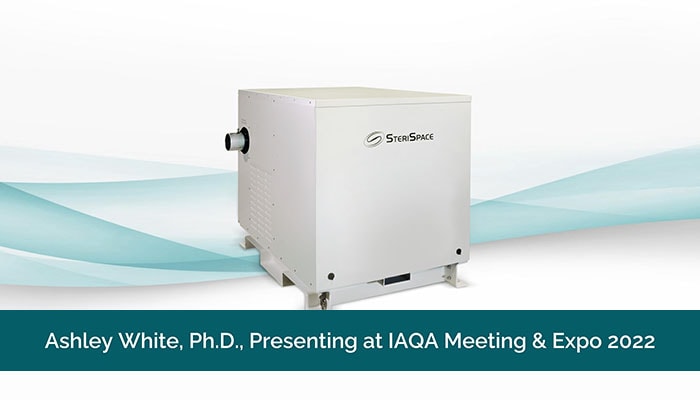
The IAQA 2022 Annual Meeting & Expo is an excellent opportunity to get exclusive access to top-notch networking and unparalleled technical education.
Can Temporary Tents be Used in the Winter?
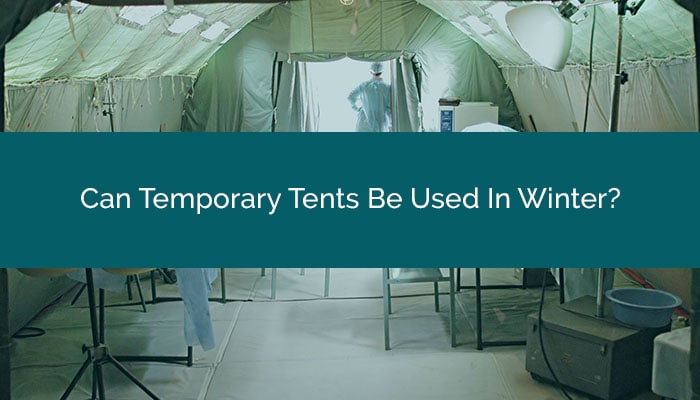
Can Temporary Tents Be Used In Winter? Facebook Link Youtube Linkedin Envelope Winterizing Temporary Tents For those of us up north, the return of winter means that another COVID-19 infection peak might be right around the corner. With this in mind, those in the healthcare and education industries are developing creative solutions to stay ahead of the disease and slow the spread. This has led to these industries turning to temporary tent structures and delegating federal funds to invest in new air filtration systems. However, while they prepare for the long winter ahead, both industries are encountering similar issues when it comes to supply and the overall effectiveness of these systems. Temporary Tents and Drive-Thru COVID-19 Testing Thanks to the ongoing COVID-19 pandemic, demand for temporary tent structures has soared. In particular, the healthcare industry has relied on temporary tent structures for their convenience and versatility in infection containment. COVID-19 drive-thru testing sites rely on temporary tent structures to relieve overwhelmed hospitals and clinics, and of course to help lessen the spread of the virus. But as temperatures drop, many workers at drive-thru sites are bearing the burden of trying to stay warm while administering tests. Cold temperatures are nothing new to most temporary tent businesses. While integrating a heating unit is the most obvious solution to beat the cold, what’s being done to maintain good air quality while limiting the collection of airborne pathogens in these structures? Difficulties Heating Tents While Maintaining Good Air Quality According to the American Society of Heating, Refrigerating and Air Conditioning Engineers (ASHRAE), three specific measures must be taken to maintain proper air quality in structures, permanent or temporary. First (and perhaps most importantly), there should be a focus on bringing in more fresh air from outside. Next, the ventilation should increase to 4 – 6 “air changes” per hour. Finally, it’s encouraged to introduce additional mechanical air filtration measures. ASHRAE spells out the issues associated with heating practices and warming up the fresh air. Not only are the costs associated exorbitant, but it is also profoundly inefficient for saving energy. With standard HVAC units in place, it’s less expensive to simply reheat the return air from the system. But this method ultimately comprises air quality. Not to mention, using an air filter to clean the hot air on the supply side of the system isn’t a practical option, as it can melt or damage the filter. As it stands, indirect units such as HVAC systems do not have an efficient way of mechanically filtering the air in temporary structures. Ostensibly, HEPA filters could be a solution — but a heightened demand for the units, the need for additional integrations such as UVC lights, and an overall lack of research on their efficacy make this an impractical option. Schools and COVID-19 Relief Funding As part of the $122 billion in federal funds delegated to American school systems for COVID-19 relief, school districts across North Carolina received their portion of the federal grant to the tune of $5.5 billion. Of that enormous sum of money, about $1.1 billion has gone toward PPE, additional cleaning and disinfection supplies, and the purchasing of laptops for remote learning. While the supply of funds will aid schools well into 2024, no school district in the state has spent over 40% of its allotted funds. Unfortunately, this issue doesn’t just appear to be unique to North Carolina. Long-term projects such as replacing HVAC systems, acquiring temporary tent structures for outdoor learning, and other critical school infrastructure initiatives are taking far longer to come to fruition due to supply chain issues. For many school districts, acquiring new HVAC systems is nearly impossible. This is because HVAC companies cannot keep up with demand because of a lack of competition and the aforementioned supply chain issues. As a result, schools have been sitting on this money with no way to access the materials it was originally intended for. SteriSpace Is an All-in-One Solution for All Seasons SteriSpace offers the solution for comprehensive indoor air treatment in a wide range of settings. Schools can integrate SteriSpace with their current HVAC systems and eliminate the need to start from scratch with a new unit. What’s more, SteriSpace is a standalone unit that can be used in isolation rooms such as the nurse’s suite to contain airborne infectious diseases. For drive-thru COVID-19 testing sites and schools opting for outdoor classes — tent occupants can stay warm in the cold winter months when viral infections are at their highest without compromising air quality. Recent Posts
The Future of SARS CoV-2 Vaccination – Lessons from Influenza

To read more from Arnold A. Monto, M.D. on the future of SARS-CoV-2 vaccination, please visit You First Services, Inc.
ICU Annexes and SteriSpace Technology
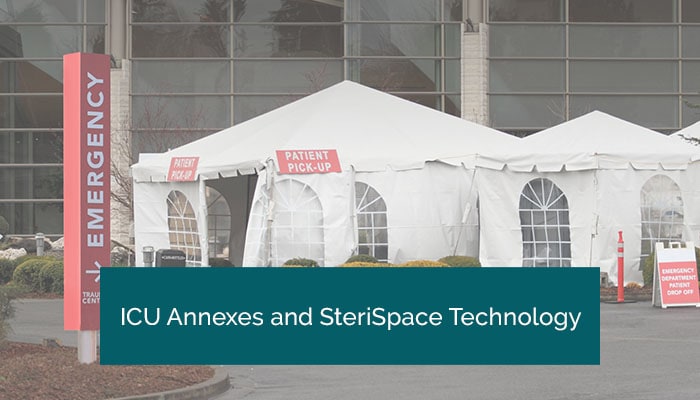
When caring for ICU patients, maintaining optimal air quality is critical. As the COVID-19 pandemic continues to overwhelm our healthcare systems, ICU annexes are faced with containing various airborne threats while caring for extremely vulnerable patients.